- Item


GENERAL
The Quiet Strength of African Traditional Religion
A Legacy of Tolerance in Ghana
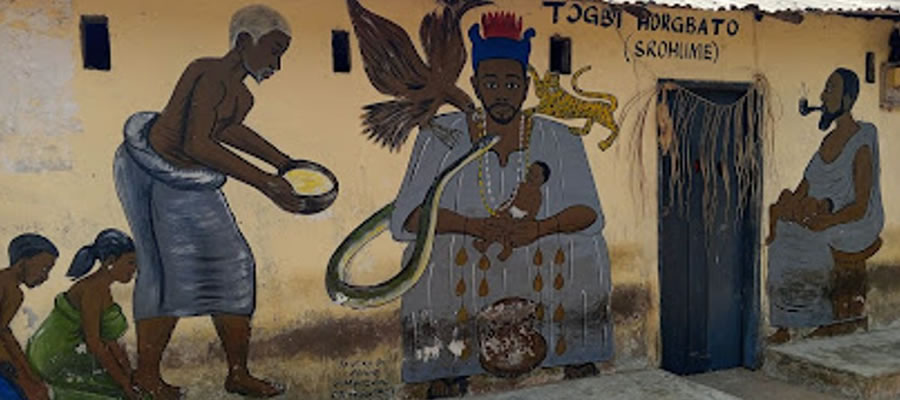
Date Created : 8/17/2026 : Story Author : Mabingba Kwabena/Ghanadistricts.com
Ghana is often described as one of the most religiously peaceful nations in the world. Walk through Accra, Kumasi, or Tamale, and you will encounter a church, a mosque, and a shrine—all within the same community. That peaceful coexistence did not happen by accident.
Its foundation lies in African Traditional Religion, the oldest spiritual system in Ghana and across the continent.
Long before the first missionaries arrived on the Gold Coast, and long before Islam spread through the northern trade routes, Ghanaians were already worshipping. They honored the Creator, whom they called by many names—Nyame, Mawu, Uwunbore, and others. They revered ancestors, honored the land, rivers, and seasons, and lived by values of community, respect, and balance.
Then Christianity and Islam arrived. They came with new books, new buildings, and new teachings. With them also came criticism. For centuries, African Traditional Religion has been labeled fetish, pagan, backward, and darkness. Its priests and shrines have been mocked in sermons, in textbooks, and in public discourse. Even today, some of those insults continue.
Yet, in all that time, African Traditional Religion has not responded with the same hostility.
That silence is not weakness. It is tolerance. And it deserves to be named and honored.
African Traditional Religion is not built around conversion. It does not send missionaries to knock on doors. It does not teach that one must leave their family to be accepted by the Creator.
The core idea is this: the Creator made many nations and gave each nation a way to know Him. That is why a traditional priest in Ghana will tell you, "Your way to God is through your church. My way is through my ancestors and the shrine. Both can be true."
That worldview makes room for others. It does not demand that everyone worship the same way.
When Christianity and Islam came, African Traditional Religion did not declare war on them. Instead, communities found ways to live together. A Christian can pour libation with family during a funeral, then go to church on Sunday. A Muslim chief can sit with traditional elders to settle a land dispute. Festivals like Homowo, Damba, and Lingui are attended by people of all faiths.
The traditional system made space. It adapted. It allowed the new religions to build—even while being criticized by them.
Not retaliating is hard. When your beliefs are insulted publicly, the natural response is to insult back. African Traditional Religion chose a different path.
It taught us: Do not fight over God. The gods will judge. Let your life show the truth.
That restraint has kept Ghana from the kind of religious violence we have seen in other parts of Africa and the world. Our tolerance is not written in law alone. It is written in the character of the first faith this land knew.
Some pastors go to the extent of burning shrines or smaller gods in some communities in Ghana—for example, Osofo Kyire Abosum. Yet under no circumstances will a traditional leader burn a church or a mosque.
Ghana in 2026 is facing new pressures: social media outrage, political division, and imported culture wars. If we lose the spirit of tolerance, we lose the peace we are known for.
We must teach our children that the oldest religion in this country did not survive by force. It survived by patience. It survived by allowing others to exist beside it.
Criticism will come to any faith. But a mature faith does not need to shout back. Sometimes the strongest answer is to keep the shrine open, keep the community fed, and keep the values of respect and truth alive.
This is not a call for Ghanaians to return to traditional worship. It is a call to recognize the truth.
African Traditional Religion was here first. It was insulted, and it did not insult back. It was pushed to the margins, and it still welcomed others to the center.
That is tolerance. That is maturity. That is African.
As we build the Ghana of the future, let us remember the quiet strength that held us together in the beginning. Let us give African Traditional Religion the respect it has given to everyone else.
In honoring our roots, we protect the peace of our branches.
Thanks to all faiths.
Other Stories
GoG Portal
Local Gov Ministry
Int of Local Gov Studies
Ministry of Information
Local Gov Service
Ghana MPs
Ghana Hospitals
NALAG
Local Gov Ministry
Int of Local Gov Studies
Ministry of Information
Local Gov Service
Ghana MPs
Ghana Hospitals
NALAG
 facebook
 X
X
 Youtube
 instagram
 whatsapp
 +233 593 831 280
+233 20 230 9497
+233 593 831 280
+233 20 230 9497 0800 430 430
 GPS: GE-231-4383
 info@ghanadistricts.com
 Box GP1044, Accra, Ghana