- Item

About the Savannah Region
The Savannah Region is one of the newest administrative regions of Ghana, created on 15th February 2019 through Constitutional Instrument (CI) 115, following a national referendum and subsequent constitutional amendment. The region was carved out of the former Northern Region as part of the government's decentralisation agenda to bring governance closer to the people and accelerate socio-economic development in the area.
The creation of the region followed a long-standing petition championed by the Gonja Traditional Council, led by the Yagbonwura Tumtumba Boresa Jakpa I, who advocated for the separation of Gonja-dominated territories from the wider Northern Region. A referendum was conducted on 27th December 2018, with an overwhelming 206,350 votes (99.52%) in favour, on a turnout of 81.77%.
Geographical Position
The Savannah Region is situated in the northern interior of Ghana, occupying a broad swathe of the country's interior savanna belt. The region's approximate central coordinates are Latitude 9° 9' N and Longitude 1° 36' W, at an average elevation of approximately 202 metres above sea level, within the GMT / UTC+0 time zone.
Borders
The Savannah Region shares boundaries with the following regions and countries:
- Upper West Region — northwest
- Northern Region — east
- North East Region — northeast
- Bono Region — south
- Bono East Region — southeast
- Côte d'Ivoire — international (west)
- Burkina Faso — international (north)
Key Statistics at a Glance
Source: 2021 Population and Housing Census – Ghana Statistical Service; RegionalSummary2026 Dataset
Metropolitan, Municipal and District Assemblies (MMDAs)
List of MMDAs — Savannah Region
Source: President John Dramani Mahama MMDCE Appointments List (2nd Term, 2025–date); Ministry of Local Government, Chieftaincy and Religious Affairs. Mouse over each district name for Capital and Status details.
- 1. Bole District
- 2. Central Gonja District
- 3. East Gonja Municipal
- 4. North Gonja District
- 5. Sawla-Tuna-Kalba District
- 6. West Gonja Municipal
- 7. North East Gonja District
Regional Minister
Mr. Salisu Be-Awuribe is a Law Lecturer, Lawyer, Valuation Professional, and Development Expert. He previously served as District Chief Executive of the Central Gonja District. He holds a Professional Qualifying Certificate in Law from the Ghana School of Law, a Master of Laws (LLM) from the University of Ghana, and both a Bachelor of Laws (LLB) and a Bachelor of Science in Land Economy from the Kwame Nkrumah University of Science and Technology (KNUST). He is married with children and hails from Kosowe in the Central Gonja District.
Economy
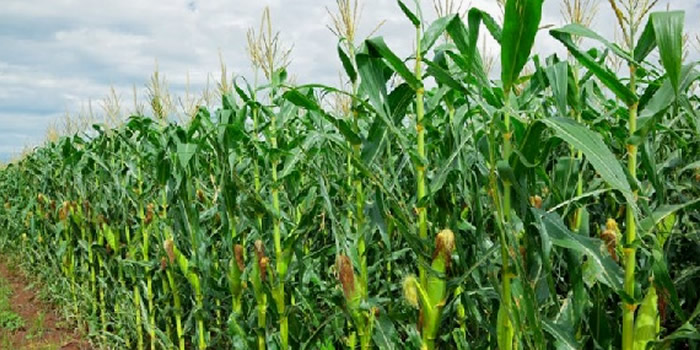
The economy of the Savannah Region is predominantly agrarian, with the majority of the population engaged in subsistence and smallholder farming, livestock rearing, and related agribusiness activities. The region's vast land area — approximately 2.69 million hectares suitable for cropping and livestock rearing — positions it as a strategically vital contributor to Ghana's food security, particularly in grains and tubers.
Tourism and Investment Potentials
The Savannah Region is one of Ghana's most compelling and rapidly growing tourism destinations, anchored by world-class wildlife, ancient cultural heritage, and community-based eco-tourism. The Ghana Tourism Authority (GTA) Savannah Regional Office recorded 23,900 tourist arrivals in 2024 — a 31.6% increase from the 18,160 recorded in 2023.
Infrastructure and Development
Infrastructure development has been a central priority for the Savannah Region since its establishment in 2019, reflecting both the challenge and opportunity presented by its vast geographical expanse and historically underserved communities.
Why the Savannah Region Matters
The Savannah Region occupies a unique and indispensable place in Ghana's national story — geographically, historically, ecologically, and economically.
Sources: Ministry of Local Government, Chieftaincy and Religious Affairs | 2021 Population and Housing Census – Ghana Statistical Service | African Development Fund / African Development Bank – SADP Grant (2022) | Ghana Tourism Authority – Savannah Regional Office (2024 Data) | Ministry of Tourism, Arts and Culture – Emancipation 2024 | Ministry of Food and Agriculture (MoFA) – MTEF 2024–2027 | The Business & Financial Times (B&FT), January 2025 | Visit Ghana – Ghana Tourism Authority | Ghanadistricts Research Team | ghanadistricts.com/Home/Region/14





Local Gov Ministry
Int of Local Gov Studies
Ministry of Information
Local Gov Service
Ghana MPs
Ghana Hospitals
NALAG
 facebook
 X
X
 Youtube
 instagram
 whatsapp
 +233 593 831 280
+233 20 230 9497
+233 593 831 280
+233 20 230 9497 0800 430 430
 GPS: GE-231-4383
 info@ghanadistricts.com
 Box GP1044, Accra, Ghana