- Item

GENERAL
SHARE project improves SRHR knowledge among adolescents in Upper East
Date Created : 8/17/2026 : Story Author : Ghanadistricts.com
The project has also enhanced adolescents’ confidence in seeking sexual and reproductive health (SRH) information and services, according to findings from its five-year endline evaluation.
The evaluation found that adolescents in the project’s treatment areas recorded higher levels of SRHR knowledge compared with those in comparison areas. It also revealed that the proportion of adolescents in the treatment areas who felt confident about seeking SRH information and services increased from 63 per cent at baseline to 83 per cent at endline.
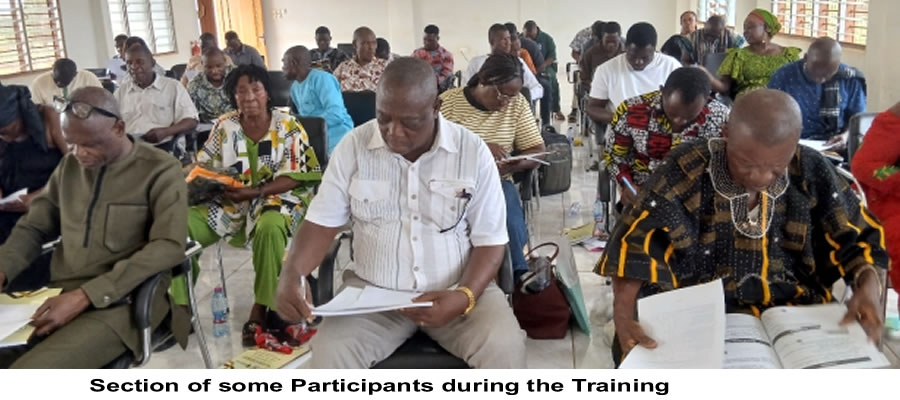
The findings were presented to stakeholders in Bolgatanga during an endline dissemination workshop aimed at assessing the project’s achievements, lessons learnt and prospects for sustaining its gains.
The SHARE Project was implemented in Ghana from July 2021 to March 2026 in Bongo and Kassena-Nankana West Districts, as well as the Builsa North and Kassena-Nankana Municipalities.
It was implemented by a consortium led by Right To Play Ghana, in partnership with Forum for African Women Educationalists Ghana (FAWE Ghana), WaterAid Ghana and FHI 360, with funding support from Global Affairs Canada.
The project sought to advance gender equality by improving access to age-appropriate sexual and reproductive health education and gender-responsive care for young people, particularly girls and young women.
Its interventions included SRHR education, health clubs, peer education, mentorship and play-based learning, as well as community dialogues, parent groups, caregiver training, health-worker training, adolescent-friendly services, referrals and social accountability activities.
The evaluation attributed the improvement in SRHR knowledge largely to increased awareness of contraception and sexually transmitted infections (STIs). However, some adolescents continued to face social and cultural barriers to accessing SRH information and services.
The evaluation noted that some adolescent boys were sometimes viewed negatively when they asked questions about SRH or attempted to access related services.
It therefore recommended that education, health and community stakeholders agree on consistent reproductive health education messages while addressing misconceptions about contraceptives among adolescents and caregivers.
Mr Harrison Akubor, Interim Country Director of Right To Play Ghana, said the findings demonstrated that the project had significantly reduced gaps in young people’s access to accurate SRHR information.
He said that prior to the project, many young people lacked accurate information about their bodies, rights and available health services, allowing myths and misconceptions to fill the information gap.
Mr Akubor said young people were now more informed, confident and better equipped to make decisions about their health and well-being.
He attributed the achievement to the collaborative efforts of government institutions, implementing partners, community leaders, teachers, health workers, parents and young people.
Mr Mohammed Issahaku, Upper East Regional Coordinating Director, said the endline evaluation was important because it enabled stakeholders to determine whether the interventions had achieved their intended results.
He commended Right To Play and its partners for introducing the initiative in the region, noting that government relied on development partners to complement its efforts in delivering essential services.
Mr Issahaku cautioned that the full impact of the project could not be assessed immediately after its completion, as adolescents and communities would continue to internalise the knowledge and skills acquired through the interventions.
He called for sustained collaboration among stakeholders and renewed efforts to mobilise resources to sustain and scale up the gains achieved under the SHARE Project.
Other Stories

Local Gov Ministry
Int of Local Gov Studies
Ministry of Information
Local Gov Service
Ghana MPs
Ghana Hospitals
NALAG
 facebook
 X
X
 Youtube
 instagram
 whatsapp
 +233 593 831 280
+233 20 230 9497
+233 593 831 280
+233 20 230 9497 0800 430 430
 GPS: GE-231-4383
 info@ghanadistricts.com
 Box GP1044, Accra, Ghana