- Item


HEALTH
Open Defecation Crisis Hits 87% in Mamprugu-Moagduri — Urgent Sanitation Action Needed
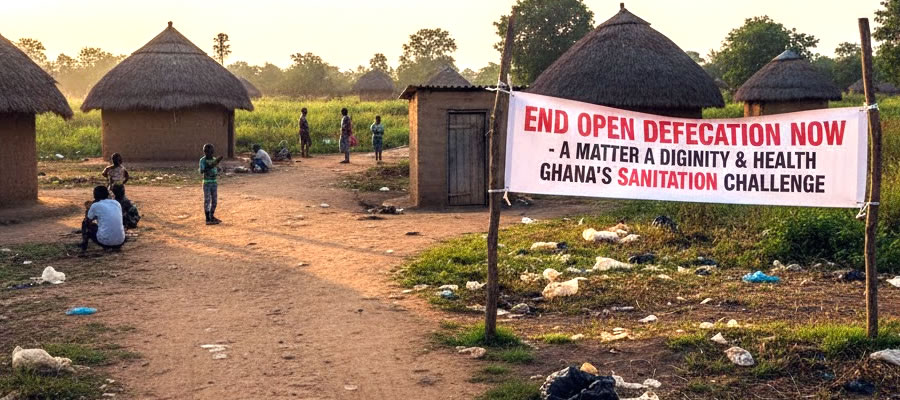
Sanitation remains one of the most pressing development challenges confronting the Mamprugu-Moagduri District, as new survey data reveals alarmingly high levels of open defecation across the district.
Date Created : 10/16/2025 : Story Author : Mary Ayertey/Ghanadistricts.com
Out of a total of 5,214 households, a staggering 87 percent rely on the bush or open fields as their main toilet facility. This figure is significantly higher than both the national average of 19.3 percent and the regional average of 72.6 percent, raising serious public health and environmental concerns.
The data further shows that only a small proportion of households have access to improved sanitation facilities. About 7.4 percent use KVIP facilities, while 3.4 percent depend on pit latrines. Modern sanitation options remain rare, with only 0.2 percent of households using water closet (WC) systems, and 0.2 percent relying on public toilets. Other practices, including bucket or pan systems, account for just 0.1 percent, while 2.1 percent fall under other unspecified categories.
Health experts warn that the widespread practice of open defecation increases the risk of waterborne diseases, environmental contamination, and poor hygiene conditions, particularly affecting children and vulnerable populations.
Stakeholders are calling for intensified sanitation campaigns, investment in household toilet facilities, and stronger enforcement of environmental health regulations to reverse the trend. Expanding access to affordable and improved sanitation infrastructure, they argue, is critical to protecting public health and restoring dignity to communities.
As Mamprugu-Moagduri strives toward sustainable development, tackling the sanitation deficit has become not just a necessity — but an urgent priority.
Other Stories







GoG Portal
Local Gov Ministry
Int of Local Gov Studies
Ministry of Information
Local Gov Service
Ghana MPs
Ghana Hospitals
NALAG
Local Gov Ministry
Int of Local Gov Studies
Ministry of Information
Local Gov Service
Ghana MPs
Ghana Hospitals
NALAG
 facebook
 X
X
 Youtube
 instagram
 whatsapp
 +233 593 831 280
+233 20 230 9497
+233 593 831 280
+233 20 230 9497 0800 430 430
 GPS: GE-231-4383
 info@ghanadistricts.com
 Box GP1044, Accra, Ghana