- Item


GENERAL
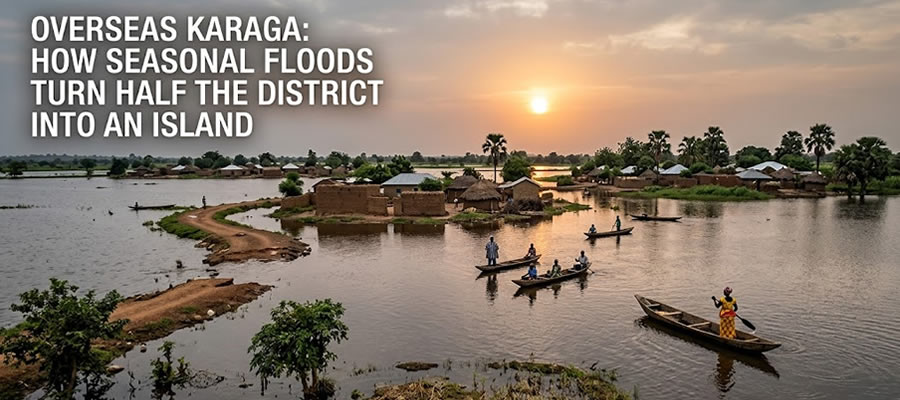
Seasonal Floods Turns Half the Karaga Municipality into an Island
Date Created : 5/14/2026 : Story Author : Ernestina Mensah/Ghanandistricts.com
Among the few things that make Karaga unique is the undulating terrain with hidden valleys that give way to small streams and larger, dramatic valleys near Sakulo and Namburugu where water converges.
As a great divider the Nasia River flowing between Namburugu and Bagli, splits Karaga cleanly into North (the “Overseas” zone) and South with no permanent bridge crossing.
Serving as intermittent lifelines, all streams- including tributaries of the Nabogu River (Dibolo–Namburugu corridor) and vanishing in the dry season, only to roar back during rains and turning into flood-driven isolation when the Nasia swells with it floods low-lying land, submerging feeder roads, halting transport, and freezes construction, health outreach, education support, and market access especially the northern part of the river.
The reality on the ground however is that, some communities like Bagli, Namburugu North, and others become practically unreachable from June to October giving rise to no all-weather access
Development freezes leading to economic ripple effect since Schools, clinics, boreholes, and road rehabilitation projects stall scheduled only for the 6-month dry window with farmers not getting their produce to markets; leading to traders delay deliveries; with students missing exams and mothers walk hours to reach antenatal care.
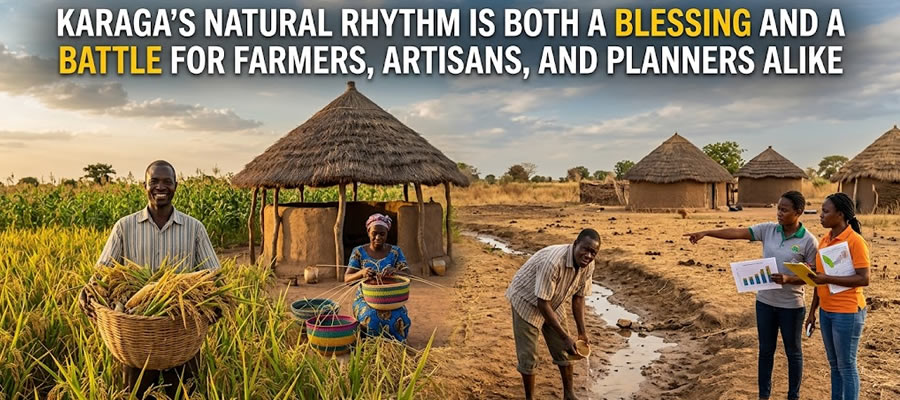
This is not just a challenge but a facilitator since Karaga’s hydrological rhythm holds untapped potential such as flood-recession agriculture resulting in fertile slit deposits left behind with timely extension services and storage and Strategic infrastructure investment due to the single resilient bridge across the Nasia service as elevated causeways which could unlock year-round connectivity and catalyze growth across the entire northern belt.
With long dry seasons come abundance sunshine resulting in solar-water synergy ideal for solar-powered irrigation, cold-chain storage and off-grid health facilities in isolated communities
Other Stories



Local Gov Ministry
Int of Local Gov Studies
Ministry of Information
Local Gov Service
Ghana MPs
Ghana Hospitals
NALAG
 facebook
 X
X
 Youtube
 instagram
 whatsapp
 +233 593 831 280
+233 20 230 9497
+233 593 831 280
+233 20 230 9497 0800 430 430
 GPS: GE-231-4383
 info@ghanadistricts.com
 Box GP1044, Accra, Ghana