- Item


GENERAL
Kintampo South NCCE Empowers Women's Groups to Combat Corruption
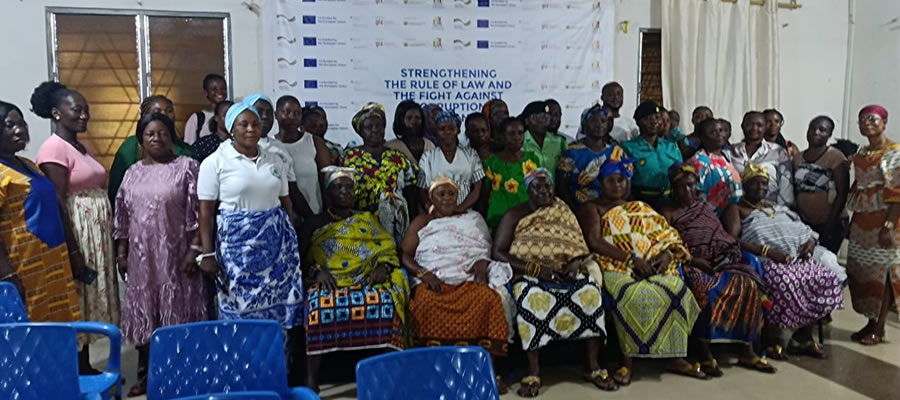
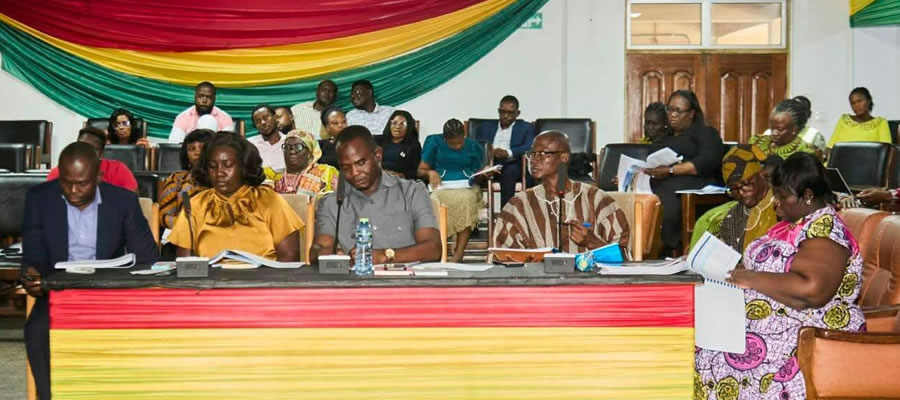
The Kintampo South District Directorate of the National Commission for Civic Education (NCCE) has engaged identifiable women's groups in a collaborative effort to fight corruption and promote respect for the rule of law.
Date Created : 10/20/2026 : Story Author : Rufina Yuoni / Ghanadistricts.com
The engagement was a follow-up to a previous activity organized for the women under the Participation, Accountability and Integrity for Resilient Democracy (PAIRed) programme. The programme is implemented by the Deutsche Gesellschaft für Internationale Zusammenarbeit (GIZ) in partnership with Ghana’s Ministry of Finance through the NCCE.
It is an initiative of the German Federal Ministry for Economic Cooperation and Development (BMZ), co-financed by the European Union and the Swiss State Secretariat for Economic Affairs. The project seeks to empower women to identify, resist, and report corrupt practices while promoting transparency and accountability in public institutions.
It is an initiative of the German Federal Ministry for Economic Cooperation and Development (BMZ), co-financed by the European Union and the Swiss State Secretariat for Economic Affairs. The project seeks to empower women to identify, resist, and report corrupt practices while promoting transparency and accountability in public institutions.
Addressing the participants, Mr. Daniel Kwadjo Asempah, Civic Education Officer for the NCCE in Kintampo South, explained that the gathering aimed to assess how the women had applied the civic knowledge acquired during the previous session.
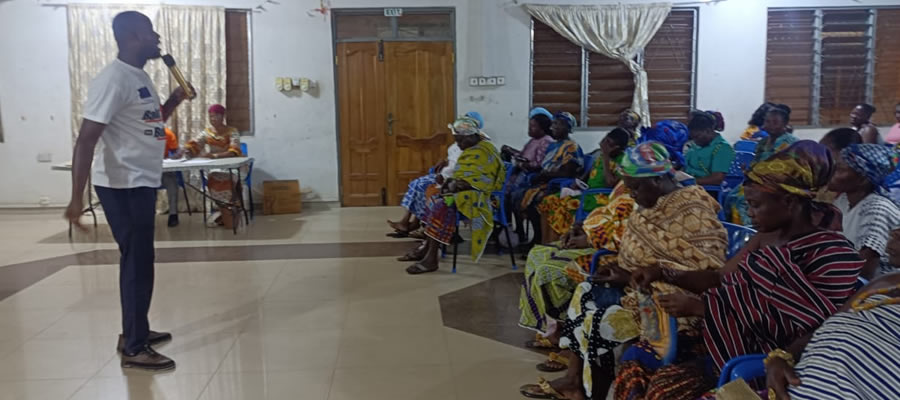
The interactive format allowed participants to share their experiences, challenges, and successes in applying their new knowledge. Several participants acknowledged that the prior engagement equipped them with the skills to report suspected corruption and identify the appropriate institutions for such reports.
Nana Amobea, Queenmother of Jema Ntoase, shared a success story, noting that she had reported a case of favouritism and corrupt practices to the Commission on Human Rights and Administrative Justice (CHRAJ) for investigation. She stated that the practices have since reduced and that she has not heard of similar cases from the district hospital.
Another participant, Mrs. Fosuaa Patricia, called for fairness and transparency in departments such as Town and Country Planning and the Birth and Death Registry regarding their charges. She advocated for the issuance of official receipts whenever monies are paid at these offices.
 Mr. Elijah Mawutor, the NACAP Coordinator who served as a resource person, stressed the importance of due diligence before reporting corrupt activities. He also advised participants to follow up on cases to ensure they are resolved. He added that they should take advantage of the Whistleblower Act, 2006 (Act 720), to report criminal and corrupt activities to the institutions mandated by law to investigate them.
The participants collectively called for sustained civic education to help address barriers and empower women to become active participants in the fight against corruption.
A total of 54 participants were engaged, the majority of whom were women.
Other Stories






GoG Portal
Local Gov Ministry
Int of Local Gov Studies
Ministry of Information
Local Gov Service
Ghana MPs
Ghana Hospitals
NALAG
Local Gov Ministry
Int of Local Gov Studies
Ministry of Information
Local Gov Service
Ghana MPs
Ghana Hospitals
NALAG
 facebook
 X
 Youtube
 instagram
 whatsapp
 +233 593 831 280
+233 20 230 9497
 0800 430 430
 GPS: GE-231-4383
 info@ghanadistricts.com
 Box GP1044, Accra, Ghana