- Item


GENERAL
NPP Minority Demands Foreign Minister's Head Over U.S. Visa Crisis, Citing "Reckless Diplomacy"
Date Created : 1/20/2026 : Story Author : Ghanadistricts.com
The opposition bloc accuses him of "reckless diplomacy" it claims has severely damaged Ghana's global reputation and now poses a direct multibillion-dollar threat to the nation's economy through a critical pause in U.S. immigrant visas.
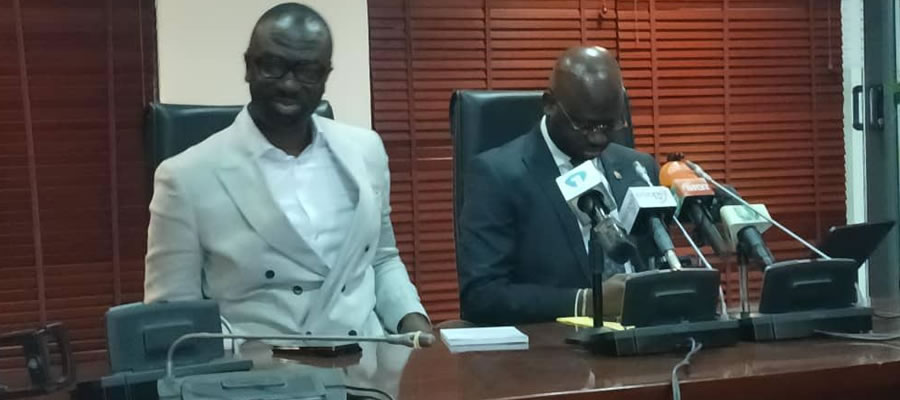
The Minority's call for the minister's removal was delivered forcefully at an emergency press conference in Parliament on Tuesday, January 20, 2026. Speaking on behalf of the group, Nana Asafo-Agyei, MP for Bosome Freho and Deputy Ranking Member on the Foreign Affairs Committee, framed the situation as a national emergency requiring immediate corrective action from President John Dramani Mahama.
The core of the crisis, according to the Minority, is Ghana's inclusion on a United States Department of State list of 75 countries subjected to an indefinite pause in processing immigrant visas. Asafo-Agyei labeled this development a profound "diplomatic humiliation" and a clear and present danger to the welfare of countless Ghanaian families who rely on financial support from relatives living abroad.
"The national interest demands change. The welfare of millions of Ghanaians demands it. Ghana’s reputation in the world demands it," Asafo-Agyei declared, stating the Minority had lost all confidence in Minister Ablakwa's "judgment, temperament and competence." He warned that the visa freeze directly imperils a vital economic lifeline.
Citing annual diaspora remittances to Ghana totaling between $3.7 billion and $6.6 billion—with the U.S. contributing up to $2.5 billion of that sum—the Minority argued the financial stakes are catastrophic. "When you freeze immigrant visa processing, you do not merely delay dreams; you choke an economic lifeline," Asafo-Agyei asserted, predicting increased household hardship if the situation persists..jpg)
The opposition laid blame for the diplomatic breakdown directly on Minister Ablakwa's doorstep. They accused him of abandoning professional, behind-the-scenes engagement with the U.S. in favor of confrontational "megaphone diplomacy." The Minority alleged he failed to anticipate Washington's policy shifts and mishandled longstanding bilateral issues, from deportation cooperation to documentation disputes, leading to punitive measures.
This critique extended to other foreign policy fronts. The Minority pointed to Ghana's diplomatic row with Israel in December 2025, criticizing the government's "reciprocal" deportation of Israeli nationals from Accra as a violation of diplomatic norms that unnecessarily escalated tensions. They further argued that such posturing has isolated Ghana, weakening its ability to rally European allies to advocate on its behalf in Washington.
Beyond demanding the Foreign Minister's ouster, the NPP Minority issued a series of ultimatums to the Mahama administration. These include a comprehensive public briefing on the U.S. visa issue within seven days, the establishment of a high-level technical working group with Washington, and the appointment of a special envoy on diaspora affairs. They also called for an end to "tit-for-tat" deportations.
In a further widening of their offensive, the Minority called for the recall of Ghana's Ambassador to the United States, Victor Emmanuel Smith. They accused him of neglecting proactive engagement with U.S. authorities on the visa crisis while becoming entangled in domestic political controversies, thereby failing in his core diplomatic duty.
As of Tuesday evening, the Ministry of Foreign Affairs and Regional Integration had not issued an official response to the sweeping allegations. While government officials have previously stated that engagement on the visa issue is ongoing through proper channels, the Minority remains adamant: without immediate and decisive leadership changes, Ghana faces continued erosion of both its international standing and its economic stability.
Other Stories



Local Gov Ministry
Int of Local Gov Studies
Ministry of Information
Local Gov Service
Ghana MPs
Ghana Hospitals
NALAG
 facebook
 X
X
 Youtube
 instagram
 whatsapp
 +233 593 831 280
+233 20 230 9497
+233 593 831 280
+233 20 230 9497 0800 430 430
 GPS: GE-231-4383
 info@ghanadistricts.com
 Box GP1044, Accra, Ghana