- Item


HEALTH
GHS inaugurates committee for 24-hour health services
The Ghana Health Service (GHS) on Monday inaugurated a 10-member committee to oversee its alignment with the government’s 24-hour economy initiative.

Date Created : 7/15/2025 : Story Author : Linda Naa Deide Aryeetey/Ghanadistricts.com
The committee will provide policy direction and institutional coordination for healthcare facilities under the initiative.
Professor Samuel Kaba Akoriyea, Director-General of the Service and Chairman of the Committee, inaugurated the team in Accra and tasked members to develop practical and innovative solutions to strengthen the health system.
Committee members include Mr. Sylvester Bekyur Ziniel, Mr. Joseph Kofi Adusei, Mr. Nicholas Nyablomu, Dr Oliver Commey, Dr Samuel Boakye Boateng, Dr Lawrence Ofori-Boadu, Franklin Asiedu Bekoe, Mr. Mustapha Hamidu, and Mr. Kingsford Cudjoe.
Prof Akoriyea urged the committee to explore ways to expand night-time services at health centres and CHPS compounds, especially in resource-constrained settings.
He said the team must find a balance between maintaining staff motivation and safety while implementing shift systems across facilities.
Prof Akoriyea also called for proposals on digital support, partnerships, and funding mechanisms to sustain the 24-hour economy agenda, and ways to boost productivity and efficiency in the health sector.
Dr Boakye Boateng, Director of Policy Planning, Monitoring and Evaluation (PPME), GHS, said the health sector must adapt to meet the needs of a workforce and population operating beyond traditional hours.
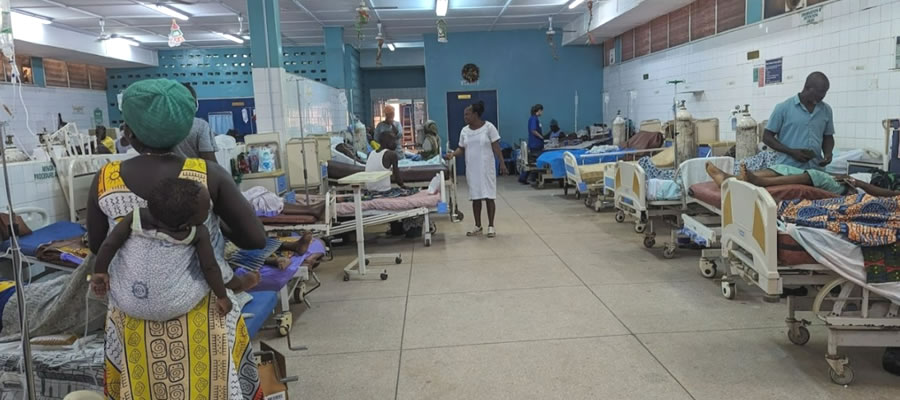
He noted that while some hospitals offered round-the-clock services, many CHPS compounds and health centres operated within standard hours, limiting night-time response capacity.
“That creates disparities in access, delays in care, and sometimes tragic outcomes,” he said. Dr Boateng stressed that aligning GHS operations with the 24-hour economy required more than extended hours.
“It involves rethinking workforce deployment models, including shift systems and night-duty protocols and strengthening infrastructure, including lighting, security, power supply, and staff accommodation,” he said.
He added that enhanced supervision, digital tools, and referral systems were essential for efficient night-time coordination.
“The health system must be prepared to respond to the needs of the public consistently, reliably, and equitably, whether they occur at midday or midnight.
“Healthcare is not a service we can pause. Emergencies, maternal deliveries, accidents, respiratory distress, mental health crises, and night-time injuries are realities of daily life,” he said.
Dr Boateng said the 24-hour economy cannot succeed without a 24-hour health system.
“When health is available at all hours, people are empowered to live, work, and thrive in safety and dignity,” he stated.
He called for boldness, collaboration, and clarity of purpose in advancing the initiative.
“Ghana deserves a health system that works, not just when it is convenient, but whenever it is needed,” he said.
The 24-Hour Economy Policy, launched by President John Dramani Mahama, aims to unlock Ghana’s economic potential by enabling continuous productivity, expanding employment, and ensuring inclusive access to essential services.
Other Stories





GoG Portal
Local Gov Ministry
Int of Local Gov Studies
Ministry of Information
Local Gov Service
Ghana MPs
Ghana Hospitals
NALAG
Local Gov Ministry
Int of Local Gov Studies
Ministry of Information
Local Gov Service
Ghana MPs
Ghana Hospitals
NALAG
 facebook
 twitter
 Youtube
 +233 593 831 280
+233 20 230 9497
+233 593 831 280
+233 20 230 9497 0800 430 430
 GPS: GE-231-4383
 info@ghanadistricts.com
 Box GP1044, Accra, Ghana