- Item


AGRICULTURE
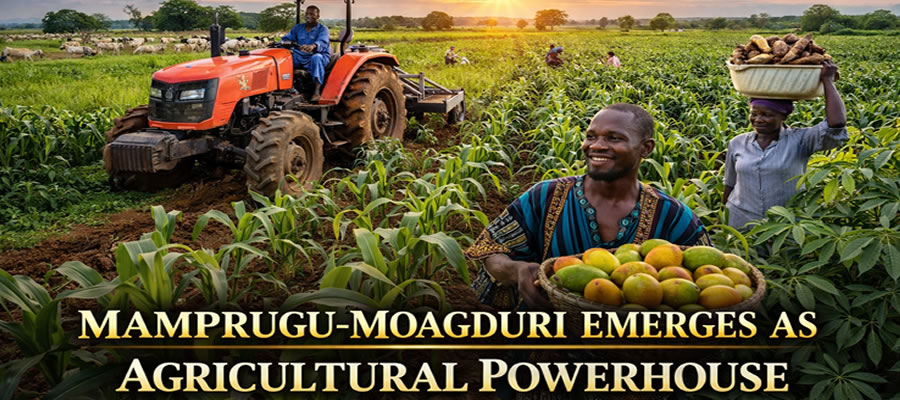
Mamprugu-Moagduri Emerges as Agricultural Powerhouse with 97% Household Participation
Agriculture continues to anchor the economy of the Mamprugu-Moagduri District, with an overwhelming 97 percent of households actively engaged in farming activities, according to the 2021 Population and Housing Census (PHC).
Date Created : 2/18/2026 : Story Author : Mary Ayertey/Ghanadistricts.com
Out of 5,214 households, nearly all are involved in agriculture, cementing the district’s status as a vibrant agrarian hub. Crop farming dominates the sector, with an impressive 98.6 percent of agricultural households cultivating crops, while livestock rearing stands as the second largest activity, engaging 75.1 percent of farmers and accounting for a total livestock population of 153,297 animals. Fish farming, though present, represents just 1.1 percent of agricultural engagement.
The district’s fertile river valleys along the White Volta present vast stretches of arable land ideal for the large-scale cultivation of rice and cereals, offering strong prospects for commercial and dry season farming. This natural advantage positions Mamprugu-Moagduri as a strategic contributor to food security in the region.
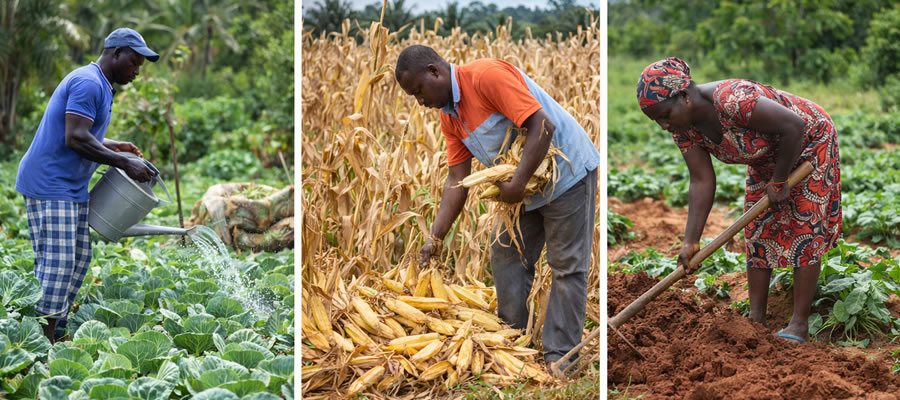
Across the district, farmers cultivate key staples such as millet, maize, beans, rice, and groundnuts, sustaining livelihoods and driving local trade. The abundance of naturally growing shea trees also supports vibrant shea butter processing activities, creating additional income opportunities, particularly for women.
With expansive land suitable for both crop and livestock production, Mamprugu-Moagduri holds enormous untapped potential for agribusiness expansion, value addition, and investment in modern farming practices.
As the district leverages its rich natural resources and hardworking farming population, Mamprugu-Moagduri is steadily positioning itself as a rising agricultural powerhouse ready to power rural transformation and economic growth.
Other Stories







GoG Portal
Local Gov Ministry
Int of Local Gov Studies
Ministry of Information
Local Gov Service
Ghana MPs
Ghana Hospitals
NALAG
Local Gov Ministry
Int of Local Gov Studies
Ministry of Information
Local Gov Service
Ghana MPs
Ghana Hospitals
NALAG
 facebook
 X
X
 Youtube
 instagram
 +233 593 831 280
+233 20 230 9497
+233 593 831 280
+233 20 230 9497 0800 430 430
 GPS: GE-231-4383
 info@ghanadistricts.com
 Box GP1044, Accra, Ghana