- Item


- District Sublinks
- Other Links
- Other Officers
- Item
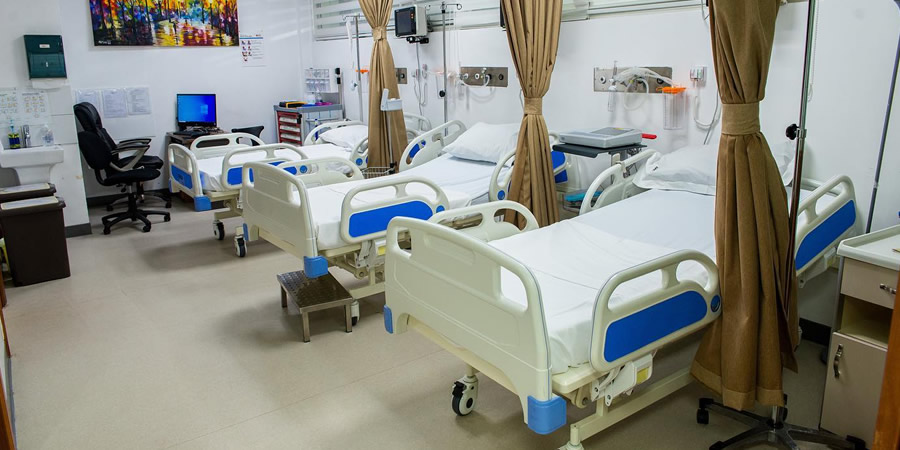
Health The Municipality is divided into seven Sub-Municipals for health administrative purposes. Currently there is no Private Health Facility in the municipality, all are Government owned. The Table below shows Sub-Municipals and the number of Health facilities.
The distribution of health facilities in the municipality is clustered in the south whiles the northernpart of the municipal has relatively fewer facilities scattered at a very long distance community from each other. This makes accessibility of healthcare in the northern part of the municipality very low as compared to the south which has higher number of clients accessing clinical care. The municipality has 2 doctors, 4 physician Assistants and 80 nurses. The doctor to patient ratio stands at 1:32,921 which is higher than the national target, whiles that of 11 nurses to patient ratio is 1:823 which is lower than the national target.
Malaria Over the years Malaria has been the leading cause of OPD attendances and admissions. As a result, there have been series of interventions to curb or reduce its burden in the country. These interventions include distribution of Insecticides Treated Bed Nets (ITNs), Intermittent PreventiveTreatment (IPT), free supply of Rapid Diagnostic Test (RDTs) Kits to test all suspected malaria cases before treatment, monitoring and supervision of interventions programs among others.
It is now a policy that all suspected malaria cases should be tested and confirmed before treatment,and track them to ensure they are cured. In 2020, there were 40,814 suspected malaria cases and 40,460 (99.1%) were tested. It was realized that 23,289 (57.6%) were positive, which means 42.4%were negative (not malaria cases), hence if not tested they would have been treated as malaria cases and that would waist antimalarial drugs. In 2019, there were 48,961 suspected malaria cases, all of them were tested and 28517 (58.2%) were positive. The proportion of OPD cases attributable to malaria was 42.3% in 2019, and it decreased to 41% in 2020. Table 3.5 shows the details of the malaria cases tested.
Maternal Health The Maternal Mortality Ratio for the Municipality has been comparatively on the lower side and within the SDG secondary target of less than 140 per 100,000 Live Births. In 2018, there was no recorded institutional maternal deaths, and the Maternal Mortality Ratio was zero (0) maternal deaths per 100,000 Live Births. In 2019 however, there were two (2) maternal deaths, representingMaternal MortalityRatio of 118 per 100,000 LiveBirths. In 2020 also, there were two (2)maternaldeaths making 12 the Ratio 113 per 100,000 Live Births. All the deaths were audited over. Table 5.7shows the Maternal Mortality Ratio over the years.
Challenges
1. The MHD staff have no office to work in due to delayed renovation of the office building.
2. Irregular payment of claims by NHIS
3. Assignment of data sets to facilities in DHIMS without prior notice to officers
4. Inadequate motorbikes to conduct some outreach services
5. Inadequate specimen containers for sample taking
6. Limited supply of medicines from RMS 7. COVID 19 affecting most activities
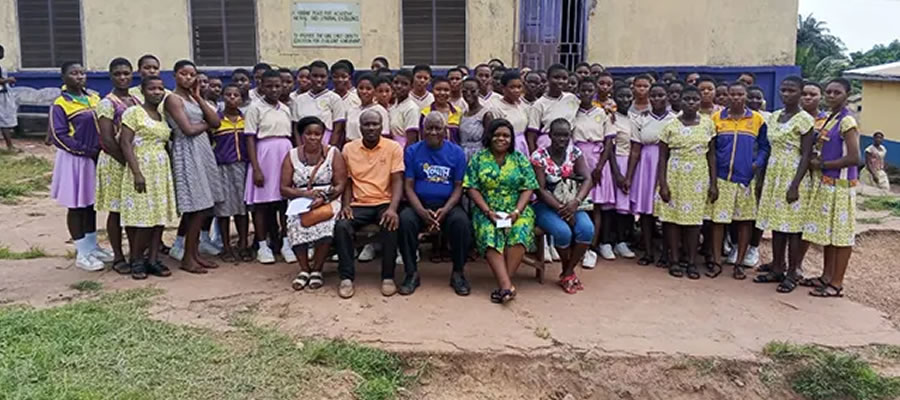
B) Child Protection An increasing population with a predominant youthful population beckons the need to put in place measures to curb early pregnancy, abandoned children and streetism. Cases of teenage pregnancyis on the rise in the Municipality which leads to a lot of these young girls dropping out of school.With pressure on them, the girl-child is either forced into early marriage or resort to engage in illegal or immoral activities to take care of the pregnancy and the child. It is therefore important to put in place child protection mechanisms.
The availability of mining opportunities attracts a lot of children to venture into illegal mining (galamsey) and its value chain activities which is hazardous to their health.
(c) Social Protection The Nzema East Municipal is currently benefitting from the LEAP program through which it extends support to some vulnerable groups. Generally, LEAP under the national social protection strategy transfers Grants to the extremely poor 14 households in the country including Nzema East. LEAP is an acronym which means Livelihood Empowerment against Poverty. It is a cash transfer programme for the pooresthouseholds in Ghana. The figure below shows the disability type. The Municipal’s total population is 60,828 (2010 PHC)of which 1,505 of them are with one form of disability or the other.
From Figure 1.4, the Hearing has the highest population of 33.7, followed by Intellect with 33.6. The rest had proportions below the 20 percent. Physical disability is 15.7 percent, Emotion with 14.2 percent, Speech with 13.6 percent, the least being Sight Disability at 2.5 percent.
Among those with disabilities in the Municipality, one in the three is either sight or physical disability and constitutes the highest disability. Speech disability was the next highest with 15.7 percent, followed by Intellect (14.2%), Hearing (13.6%), and Emotion (13.2%) with Other Disabilities constituting the lowest of all disabilities. There was a minor disparity between males and females on areas of disability. The table also indicated persons with disability with Intellect Disability were high among males (15.5%) than females (12.8%)
Date Created : 11/6/2025 2:12:43 PM




Local Gov Ministry
Int of Local Gov Studies
Ministry of Information
Local Gov Service
Ghana MPs
Ghana Hospitals
NALAG
 facebook
 X
X
 Youtube
 instagram
 whatsapp
 +233 593 831 280
+233 20 230 9497
+233 593 831 280
+233 20 230 9497 0800 430 430
 GPS: GE-231-4383
 info@ghanadistricts.com
 Box GP1044, Accra, Ghana