- Item



GOVERNANCE
Governance
The Assembly is a creation of law through the Local Governance ACT 936 of 2016. The Municipality was created through legislative instruments LI 2038. The Assembly is composed of Seven (7) electoral areas. Each electoral area is represented at the Assemblyby an elected Assembly Member. In addition to the elected assembly Members there are also 3 appointed assembly members. Thus there are 10 Assembly Members in addition to the Member of Parliament for the constituency; who is an ex officio member of the Assembly. Below the Assembly members who represent the electoral areas are also Unit committees which have five members and are also elected.
The electoral areas that constitute the Assembly
• Mataheko
• Shukura West
• Shukura East
• Mamprobi
• Russia
• Abbosey Okai
• Sabon Zongo
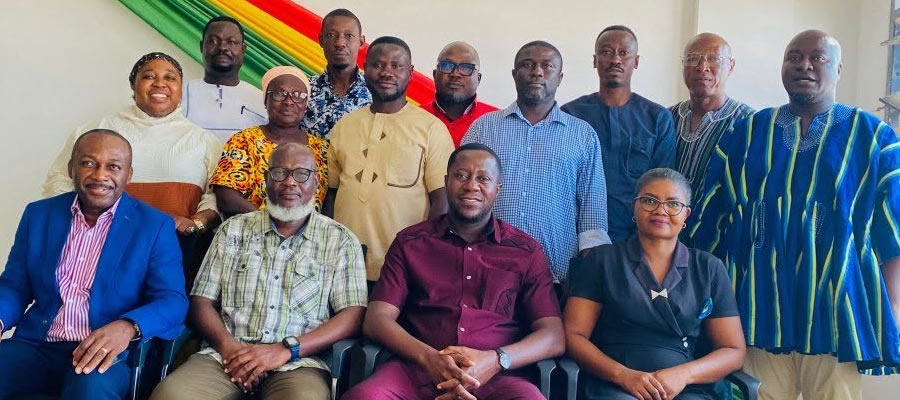
Structurally, the is made up of the General Assembly at the apex composed of 12members (including the MCE) , followed by Two (2) Zonal Councils which are subordinate bodies of the Assembly performing functions assigned to them by the instrument that sets up the Assembly or delegated to them by the Assembly.
The Ablekuma Central Municipal Assembly is composed of the Municipal Chief Executive, who is nominated by the President and approved by Two-Thirds of the members of the Assembly present and voting. General Assembly Meetings of the Assembly are chaired by the Presiding Member who is elected from among its members by Two-Thirds of all the members of the Assembly.
Each of the 2 Zonal Councils consists of not less than 25 and not more than 30 members made up of all elected members of the Assembly.
Executive Committee
The Executive Committee is made up of not more than One-Third of the total membership of the Assembly, including chairpersons of the various Sub-Committees.
The Executive Committee is made up of not more than One-Third of the total membership of the Assembly, including chairpersons of the various Sub-Committees.
The Metropolitan Chief Executive presides over the Executive Committee meetings. Heads of Departments of the Assembly attend meetings of relevant sub-committees and advise. The Executive Committee is responsible for the performance of executive and coordination functions of the Assembly. It is responsible for the implementation of the resolution of the Assembly and oversees the administration of the Municipality
Subsidiary Committees (Sub-Committee)
In the performance of its functions, the Assembly works through the Executive and its subsidiary Committees. The Executive Committee is also called the Metropolitan Authority. The Executive functions of the Assembly are performed by the Municipal Assembly, which is presided over by the Metropolitan Chief Executive. It consists of not more than 1/3 of the total membership of the Assembly excluding the Presiding Member.
The subsidiary Committees of the Metropolitan Authority are thirteen (13) in all. They include;
Mandatory
1. Finance and Administration,
2. Development Planning,
3. Works,
4. Social Services,
Others sub committees
5. Health
6. Security and Justice
7. Women and Childre
Settlement System
The Municipality is a highly urbanized with and spatially contiguous. All the settlements are together and well connected by transport linkages. Due to the highly urbanized and highly connected nature of the Municipality is its difficult to delineate the start and ending of localities. However there are 5 main localities in the municipality with distinct spatial characters. The localities include
i. Mataheko
ii. Shukura
iii. Mamprobi
iv. Russia
v. Abbosey Okai
vi. Sabon Zongo
Figure 1.7 : Settlements
Source : ABCMA MPCU
The spatial landscape of the Municipality is dominated by residential accommodation and commercial properties. The gentrification of the core commercial centers of the Municipality has led to the displacement of residential accommodation to be replaced by
commercial and mixed used buildings.
A large part of the Municipality is well planned with clearly demarcated layout and access roads. A few parts of the municipality are occupied by irregular developments and slums.
Scalogram Analysis and Hierarchy of Settlements Scalogram analysis gives insight into development tendencies of the settlement patterns. The functional analysis reveals insights into the underlying forces affecting the growth of settlements and the agglomeration of economic activities. The scalogram integrates functionality of a community according to the services that it renders. Hence, the functional hierarchy of the settlements is obtained from the scalogram by ranking settlements in the Metropolis in order of their respective total centrality score. The settlements in Accra were then graded from level one (1) to level six (6).
Accessibility to Facilities
Accessibility in the context of this plan is the ease at which the poor travels to access a service or facility. A High Access Zone refers to a facility or service provision location within the Metropolis that is easily accessible to residents. On the other hand, facility locations those are difficult to reach especially having high travel time. The facilities that are considered in the plan include;
• Banking facilities
• Markets
• Postal services
• Health facilities
• Distribution of Educational Facilities

Date Created : 5/21/2025 12:00:00 AM



GoG Portal
Local Gov Ministry
Int of Local Gov Studies
Ministry of Information
Local Gov Service
Ghana MPs
Ghana Hospitals
NALAG
Local Gov Ministry
Int of Local Gov Studies
Ministry of Information
Local Gov Service
Ghana MPs
Ghana Hospitals
NALAG
 facebook
 X
X
 Youtube
 instagram
 whatsapp
 +233 593 831 280
+233 20 230 9497
+233 593 831 280
+233 20 230 9497 0800 430 430
 GPS: GE-231-4383
 info@ghanadistricts.com
 Box GP1044, Accra, Ghana