- Item


ECONOMICS
Parliament Okays GH¢4.79bn Budget for Local Government, Highlights Systemic Challenges
The Ministry of Local Government, Chieftaincy and Religious Affairs has GHC4, 793,139,071.00 approved for it to execute its programmes and policies for the 2026 fiscal year.
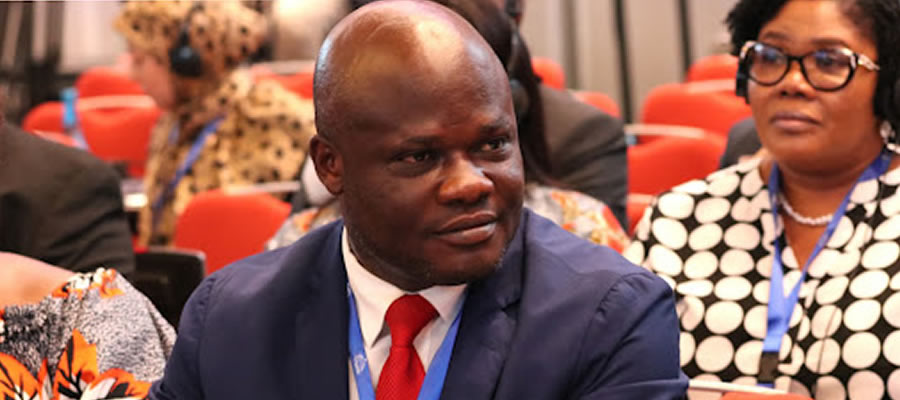
Date Created : 12/4/2025 : Story Author : Ghanandistricts.com
Parliament approved the budget on Wednesday, November 3, 2025 with a call on the Ministry of Finance to ensure regular releases to the Ministry as it is the core engine for rural development.
The Chairman of the Committee on Local Government and Rural Development, Queenstar Maame Pokuah Sawyerr appeal to the finance Ministry to intervene in beefing up the staff of the Local Government Service as they need 7,479 personnel to replace staff at the local government service who have for the past eight years either went of retirement, resigned or abandoned their posts.
The development, she noted, was affecting performance and need to be addressed as soon as possible.
Meanwhile, the Ranking Member on the Local Government and Rural Development committee acknowledged progress made by the Ministry in 2025 but emphasized that the sector continues to face structural constraints that undermine effective local governance and weaken service delivery across Metropolitan, Municipal and District Assemblies (MMDAs).
Commendations for Progress Made
The Ranking Member noted improvements in data systems, including upgrades to the District Development Data Platform (DDDP) and the DPAT portal, describing them as essential for planning and accountability. He also praised the development of the 2026–2029 National Decentralisation Policy and Strategy, and the disbursement of GH¢25 million in allowances to Assembly Members across all 261 MMDAs.
Other achievements highlighted included:
• Temporary employment for 65,020 poor and vulnerable persons, mainly women, through community development initiatives.
• Enhanced horticultural and urban beautification works by the Department of Parks and Gardens.
• Registration of over 432,000 births and 41,000 deaths by the Births and Deaths Registry.
• Strengthened spatial planning collaboration by the Land Use and Spatial Planning Authority (LUSPA).
• Continued monitoring and technical backstopping by Regional Coordinating Councils.
“These successes demonstrate that when resources are released on time and systems are aligned, the Ministry delivers results that impact the everyday lives of our people,” he said.
Challenges Undermine Decentralisation
Mr Asenso-Boakye emphasised that despite these gains, the sector is weighed down by systemic issues.
1. Budget Dominated by Compensation
He expressed concern that 65.04% of the Ministry’s 2026 allocation is earmarked for Compensation, leaving only 19% for Goods and Services and 15.96% for Capital Expenditure.
“We are paying for the cost of maintaining the system without adequately resourcing it to work,” he cautioned, stressing that Assemblies are increasingly unable to perform core functions such as sanitation enforcement, community development, and spatial planning.
2. Delays and Shortfalls in Releases
He noted major gaps between approved allocations and actual disbursements, particularly for Capital Expenditure and Development Partner (DP) funds. Some funds released in 2025 had still not been spent as of September.
“These delays leave critical projects—RCC blocks, staff bungalows, spatial planning infrastructure, and chieftaincy facilities—either stalled or abandoned, undermining public confidence,” he said.
3. Staffing and Logistics Deficits
He described persistent human resource shortages in planning, engineering, environmental health and community development, alongside severe logistical deficits in vehicles, office space and ICT tools, especially in the newly created regions.
The Ministry of Local Government, Chieftaincy and Religious Affairs has GHC4, 793,139,071.00 approved for it to execute its programmes and policies for the 2026 fiscal year.
Parliament approved the budget on Wednesday, November 3, 2025 with a call on the Ministry of Finance to ensure regular releases to the Ministry as it is the core engine for rural development.
The Chairman of the Committee on Local Government and Rural Development, Queenstar Maame Pokuah Sawyerr appeal to the finance Ministry to intervene in beefing up the staff of the Local Government Service as they need 7,479 personnel to replace staff at the local government service who have for the past eight years either went of retirement, resigned or abandoned their posts.
The development, she noted, was affecting performance and need to be addressed as soon as possible.
Meanwhile, the Ranking Member on the Local Government and Rural Development committee acknowledged progress made by the Ministry in 2025 but emphasized that the sector continues to face structural constraints that undermine effective local governance and weaken service delivery across Metropolitan, Municipal and District Assemblies (MMDAs).
Commendations for Progress Made
The Ranking Member noted improvements in data systems, including upgrades to the District Development Data Platform (DDDP) and the DPAT portal, describing them as essential for planning and accountability. He also praised the development of the 2026–2029 National Decentralisation Policy and Strategy, and the disbursement of GH¢25 million in allowances to Assembly Members across all 261 MMDAs.
Other achievements highlighted included:
• Temporary employment for 65,020 poor and vulnerable persons, mainly women, through community development initiatives.
• Enhanced horticultural and urban beautification works by the Department of Parks and Gardens.
• Registration of over 432,000 births and 41,000 deaths by the Births and Deaths Registry.
• Strengthened spatial planning collaboration by the Land Use and Spatial Planning Authority (LUSPA).
• Continued monitoring and technical backstopping by Regional Coordinating Councils.
“These successes demonstrate that when resources are released on time and systems are aligned, the Ministry delivers results that impact the everyday lives of our people,” he said.
Challenges Undermine Decentralisation
Mr Asenso-Boakye emphasised that despite these gains, the sector is weighed down by systemic issues.
1. Budget Dominated by Compensation
He expressed concern that 65.04% of the Ministry’s 2026 allocation is earmarked for Compensation, leaving only 19% for Goods and Services and 15.96% for Capital Expenditure.
“We are paying for the cost of maintaining the system without adequately resourcing it to work,” he cautioned, stressing that Assemblies are increasingly unable to perform core functions such as sanitation enforcement, community development, and spatial planning.
2. Delays and Shortfalls in Releases
He noted major gaps between approved allocations and actual disbursements, particularly for Capital Expenditure and Development Partner (DP) funds. Some funds released in 2025 had still not been spent as of September.
“These delays leave critical projects—RCC blocks, staff bungalows, spatial planning infrastructure, and chieftaincy facilities—either stalled or abandoned, undermining public confidence,” he said.
3. Staffing and Logistics Deficits
He described persistent human resource shortages in planning, engineering, environmental health and community development, alongside severe logistical deficits in vehicles, office space and ICT tools, especially in the newly created regions.
“In many districts, our officers exist on paper but are constrained in function,” he remarked.
4. Increasing Centralisation
The Ranking Member’s strongest criticism focused on what he termed “creeping centralisation and official control,” which he said violates the spirit of Articles 240–252 of the Constitution.
According to him, central government continues to prescribe in detail how local government funds, including the DACF, must be used, leaving little room for Assemblies to respond to local needs.
“When Accra determines even minor expenditure lines, we may have decentralisation on paper, but what we are practising is deconcentration—not true devolution,” he warned.
Key Recommendations
The Bantama MP urged government to:
• Rebalance the budget to increase resources for Goods and Services and CapEx.
• Ensure predictable and timely releases, especially for CapEx and DP-funded projects.
• Undertake comprehensive staff rationalisation, with logistics support for underserved districts.
• Deepen digitalisation and strengthen monitoring systems.
• Restore the spirit of decentralisation by limiting excessive central control over MMDA funds.
Support to Budget Approval
Despite his concerns, the Ranking Member gave backing to the motion, urging the House to approve the estimates but to ensure strict adherence to the recommendations contained in the committee’s report.
“We must prevent disruption to essential services while insisting that our decentralisation practices align with the Constitution,” he concluded.
Parliament subsequently approved the sum of GH¢4.79 billion budget for the Ministry for the 2026 financial year.
Other Stories



GoG Portal
Local Gov Ministry
Int of Local Gov Studies
Ministry of Information
Local Gov Service
Ghana MPs
Ghana Hospitals
NALAG
Local Gov Ministry
Int of Local Gov Studies
Ministry of Information
Local Gov Service
Ghana MPs
Ghana Hospitals
NALAG
 facebook
 X
X
 Youtube
 instagram
 +233 593 831 280
+233 20 230 9497
+233 593 831 280
+233 20 230 9497 0800 430 430
 GPS: GE-231-4383
 info@ghanadistricts.com
 Box GP1044, Accra, Ghana