- Item


EDUCATION
DCE commissions new classroom blocks, Delivers furniture to schools
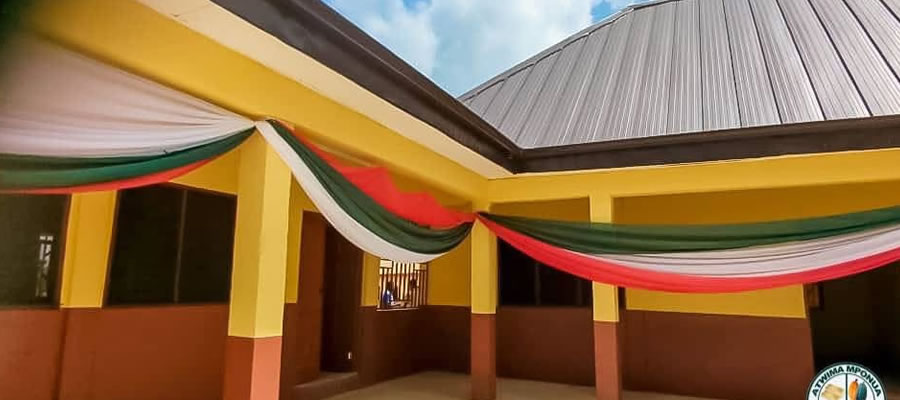
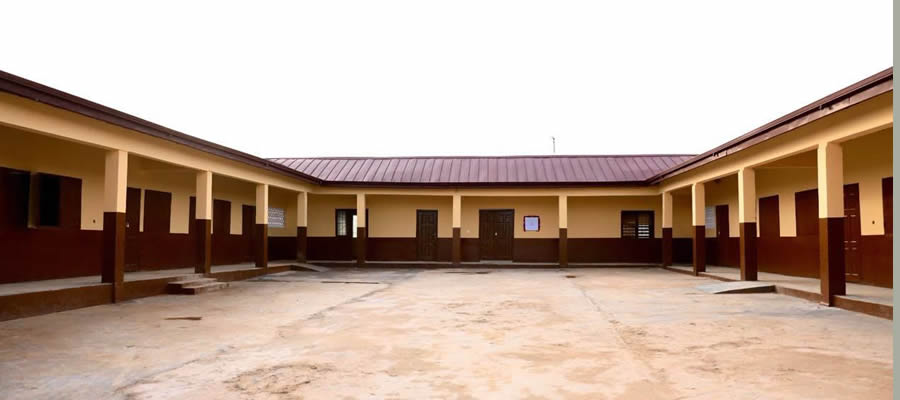
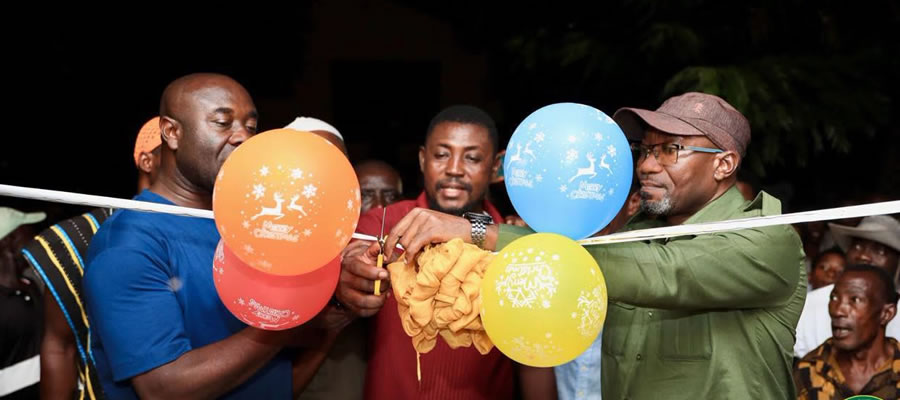
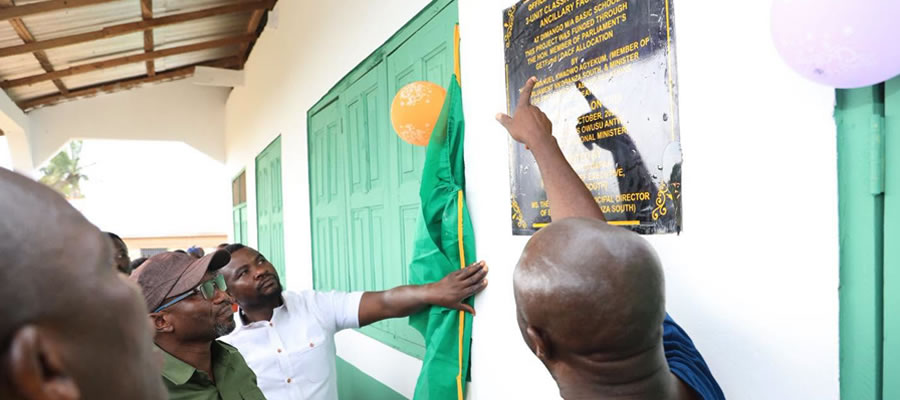
It was a moment of celebration, renewed hope and a powerful demonstration of commitment to education as Pakyi and Agogoso communities in the Atwima Mponua District witnessed the commissioning of two ultramodern six-unit classroom blocks on Friday, October 23, 2026. The projects, delivered under the development agenda of District Chief Executive (DCE), Hon. Issahak Ibrahim, are set to ease classroom congestion in Agogoso and replace a dilapidated classroom block in Pakyi, providing pupils and teachers with safer, more conducive environments for teaching and learning.
Date Created : 10/30/2026 : Story Author : Jephthah Sarfo/ ghanadistricts.com
Addressing enthusiastic residents at the ceremonies, Mr. Ekow Annan, Human Resource Manager at the Mponua Education Directorate, commended the District Assembly for expediting the completion of the projects. He described the facilities as a significant boost to educational delivery and urged pupils to take their studies seriously and make maximum use of the improved learning environment. He also appealed to parents to stop placing the burden of household survival on school-going children, warning that forcing children to become breadwinners undermines their academic progress and contributes to school dropout, juvenile delinquency and teenage pregnancy.
In a significant announcement, Mr. Annan disclosed that the newly commissioned Agogoso classroom block had been earmarked to serve as a Basic Education Certificate Examination (BECE) centre, owing to its built-in security architecture. The development could improve examination arrangements for candidates in the area and further establish Agogoso as an important educational hub within the district.

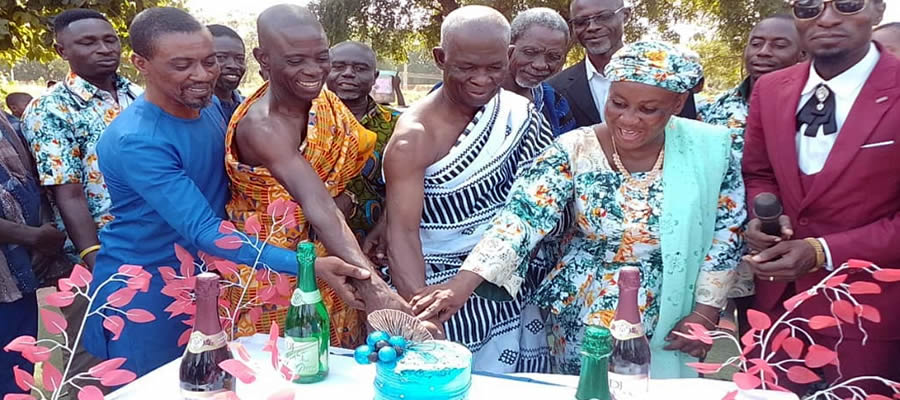
The celebrations reached an exciting pitch as Hon. Issahak Ibrahim joined the elated residents in dancing to melodious tunes, reflecting the joy and appreciation of the communities. In his address, the DCE expressed gratitude to the National Democratic Congress (NDC) government for the timely release of the District Assemblies Common Fund, which he said had helped accelerate development projects. He also acknowledged the previous New Patriotic Party (NPP) administration for initiating the Pakyi project, emphasising that development must transcend political differences.
Hon. Issahak explained that the President had directed Metropolitan, Municipal and District Chief Executives to complete legacy projects inherited from previous administrations. He said the directive underscored the government's commitment to ensuring that public investments deliver tangible benefits to citizens, rather than allowing projects to be abandoned because of changes in political leadership. The completion of the Pakyi classroom block, therefore, stands as an example of the importance of continuity in governance and responsible management of public resources.
Turning his attention to parents, the DCE urged them to take greater responsibility for the welfare and education of their children, stressing that government efforts alone cannot guarantee educational success without active parental support. He reiterated the government's ambition for every Ghanaian child to complete at least Senior High School, describing education as an indispensable foundation for national development, social progress and the preparation of a skilled future workforce.
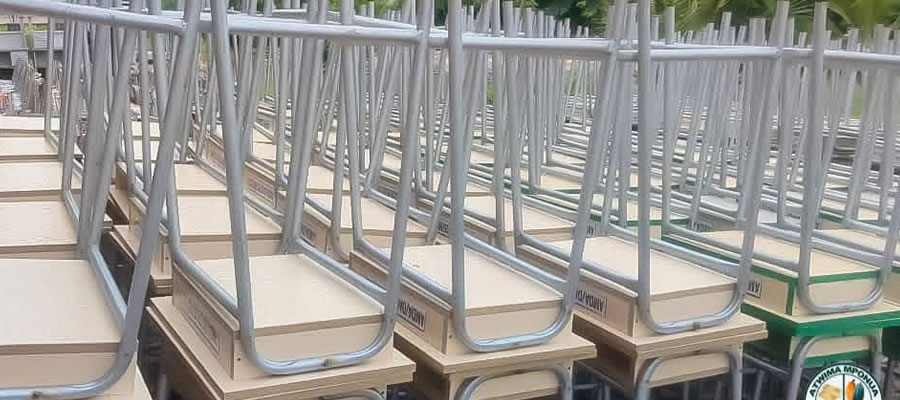
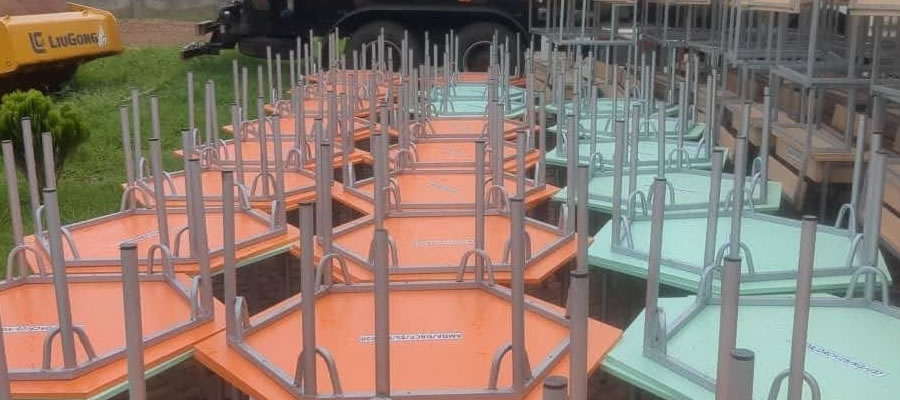
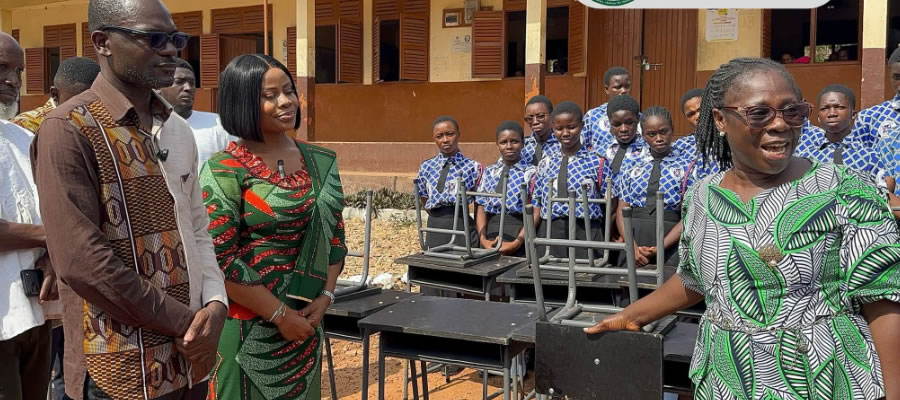
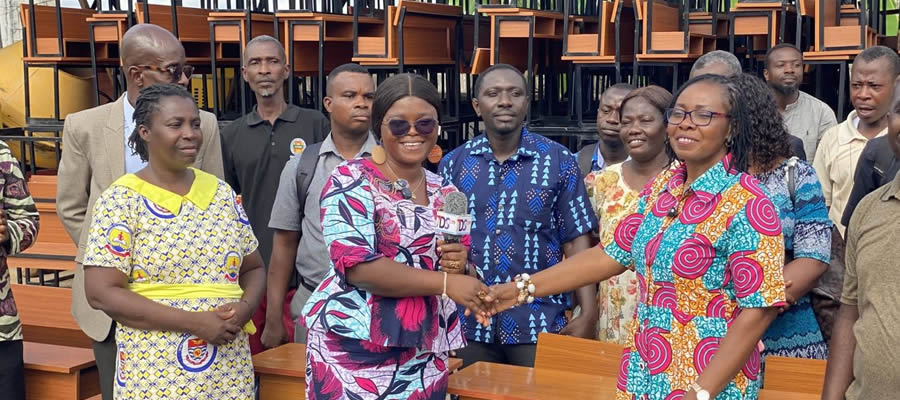
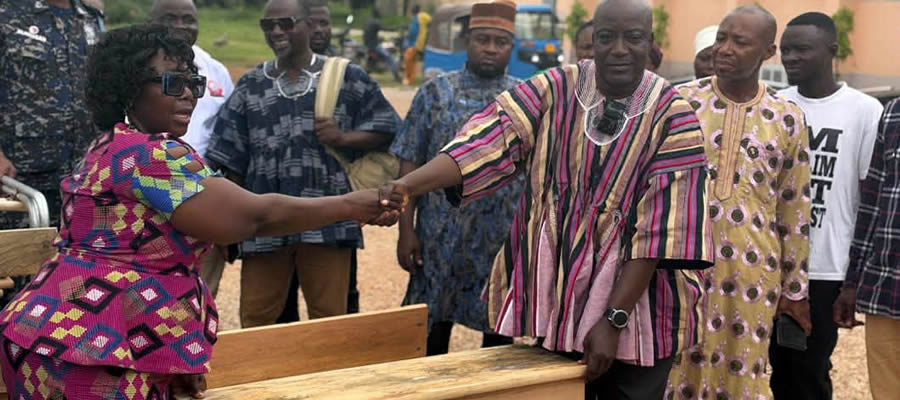
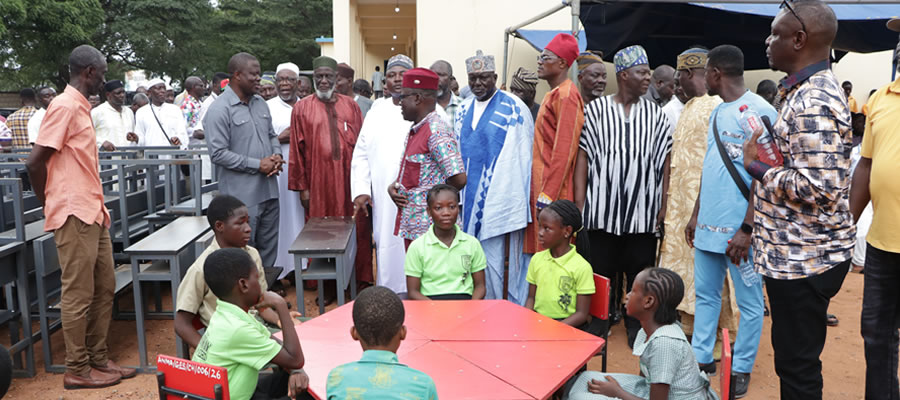
Beyond the commissioning of the classroom blocks, Hon. Issahak reinforced the Assembly's commitment to improving teaching and learning by providing substantial furniture support to schools across the district. The distribution comprised 360 dual desks, 250 mono desks, 300 chairs for kindergarten pupils, 50 hexagonal kindergarten tables, and 50 desks and chairs for teachers. The intervention is expected to ease furniture shortages, improve classroom organisation and create a more comfortable learning environment for pupils and teachers in beneficiary schools.
The DCE further charged School Management Committees (SMCs) and headteachers to make maintenance a priority, warning that the long-term value of the new facilities would depend on how well they were protected and managed. He urged school authorities and community stakeholders to cultivate a strong sense of ownership and ensure that the buildings and furniture remained in good condition for future generations of learners.
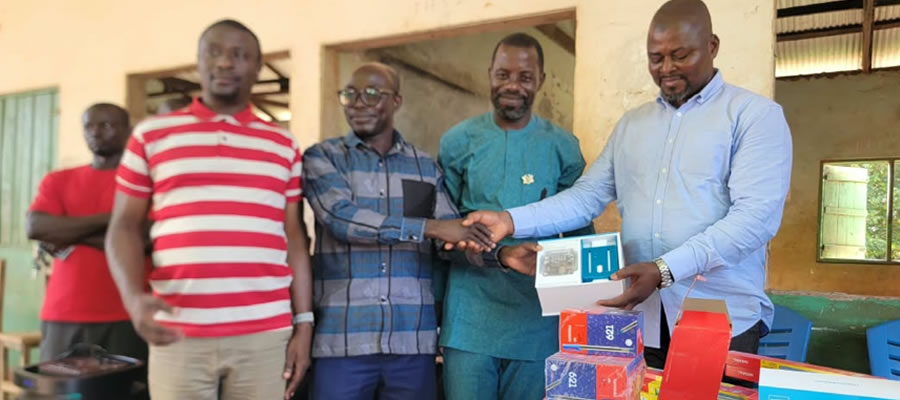
The well-attended ceremonies brought together political representatives, clergy, traditional authorities, the media, staff of the District Assembly and residents from the beneficiary communities. Their enthusiastic participation reflected the significance of the projects to local families and the wider district.
Other Stories
GoG Portal
Local Gov Ministry
Int of Local Gov Studies
Ministry of Information
Local Gov Service
Ghana MPs
Ghana Hospitals
NALAG
Local Gov Ministry
Int of Local Gov Studies
Ministry of Information
Local Gov Service
Ghana MPs
Ghana Hospitals
NALAG
 facebook
 X
 Youtube
 instagram
 whatsapp
 +233 593 831 280
+233 20 230 9497
 0800 430 430
 GPS: GE-231-4383
 info@ghanadistricts.com
 Box GP1044, Accra, Ghana