- Item


HEALTH
Effutu Intensifies Hiv/Aids fight as 153 Test Positive in 2025; 69 Recorded in First Half of 2026
Date Created : 11/2/2026 : Story Author : Irene Danso/Ghanadistricts.com
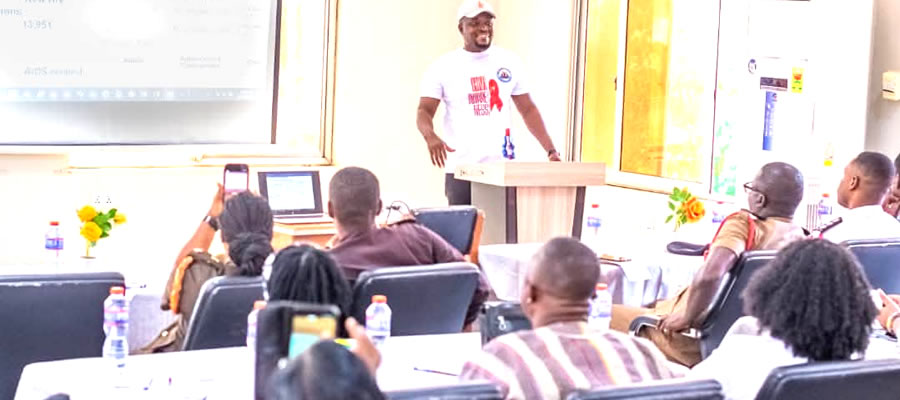
The forum held on Thursday, October 29, 2026, at the Effutu Municipal Assembly Conference Room, brought together representatives of public institutions, health facilities, security agencies, traditional and religious authorities, educational institutions and civil society organisations to deliberate on strategies for strengthening the Municipality's response to HIV/AIDS.
Among the participants were the Municipal Chief Executive, Rev. Atta Mensah; Municipal Coordinating Director, Mr. Majeed Ayariga; Municipal Health Director, Dr. Paulette Brown; representatives of the Ghana National Fire Service, Ghana Prisons Service and Ghana Immigration Service; members of the Traditional, Christian and Islamic Councils; representatives of the University of Education, Winneba (UEW), including its Students' Representative Council (SRC); health professionals from UEW Hospital, Winneba Municipal Hospital and Trauma and Specialist Hospital; and selected non-governmental organisations.
Addressing participants, the MCE described the HIV/AIDS situation as a serious public health concern requiring urgent and coordinated intervention. He called for strengthened community-level education, increased voluntary testing and sustained efforts to eliminate the stigma and discrimination that prevent people from seeking testing and treatment services.
Rev. Mensah underscored the importance of collective responsibility in building healthier communities, urging stakeholders to become advocates of HIV prevention and awareness within their respective institutions and communities. He further expressed confidence that participants would translate the knowledge acquired at the forum into practical interventions capable of improving public understanding and reducing new infections. He reaffirmed the Municipality's commitment to the global target of ending AIDS as a public health threat by 2030, stressing that national transformation must begin at the community level.
Presentations delivered by the Municipal Health Director, Dr. Paulette Brown, alongside resource persons Melody Delali and Isaac, provided an overview of the national and municipal HIV situation, highlighting infection trends, transmission patterns, prevention strategies, testing and treatment.
Participants were informed that Ghana recorded its first HIV case in 1986 and had an estimated 337,435 people living with HIV in 2025.
The forum highlighted the principal modes of HIV transmission, including unprotected sexual intercourse, the sharing of contaminated needles and sharp instruments, and mother-to-child transmission during pregnancy, childbirth or breastfeeding without appropriate preventive interventions.
Participants were also educated on common misconceptions surrounding HIV transmission. They were reminded that the virus cannot be transmitted through ordinary social interactions such as handshakes, hugging, sharing meals or using the same toilet facilities.
On prevention, the resource persons emphasised abstinence, mutual faithfulness, correct and consistent condom use, regular HIV testing and avoiding the sharing of sharp instruments. They also introduced participants to pre-exposure prophylaxis (PrEP) and post-exposure prophylaxis (PEP), explaining their roles as additional medical interventions for preventing HIV infection.
A practical demonstration of correct condom use and the operation of HIV test kits formed part of the training to strengthen participants' practical understanding of prevention and testing procedures. The resource persons further clarified that contraceptive pills prevent pregnancy but offer no protection against HIV or other sexually transmitted infections. They stressed that a reactive HIV screening result does not, on its own, constitute a confirmed diagnosis and must be followed by confirmatory testing in accordance with approved national health guidelines.
Emphasis was also placed on early diagnosis and strict adherence to antiretroviral treatment. Participants were informed that although there is currently no widely available cure for HIV, effective treatment enables people living with the virus to lead long, productive and healthy lives.
Other Stories




Local Gov Ministry
Int of Local Gov Studies
Ministry of Information
Local Gov Service
Ghana MPs
Ghana Hospitals
NALAG
 facebook
 X
 Youtube
 instagram
 whatsapp
 +233 593 831 280
+233 20 230 9497
 0800 430 430
 GPS: GE-231-4383
 info@ghanadistricts.com
 Box GP1044, Accra, Ghana