- Item


Beautiful but Fragile: The Environmental Battle Sheathed in Karaga's Damba Drums
Date Created : 5/18/2026 6:46:51 AM : Story Author : Ernestina Mensah/Ghanadistricts.com
Ninety-five percent of households burn wood and charcoal for cooking, depleting the very tree species that hold the ecosystem together. And in the housing sector, the picture is equally stark: only seven percent of homes have internal toilet facilities, leaving the vast majority dependent on open defecation and public latrines.
This is the story behind the statistics — a story of a district fighting to protect its environment while meeting the daily needs of its growing population.
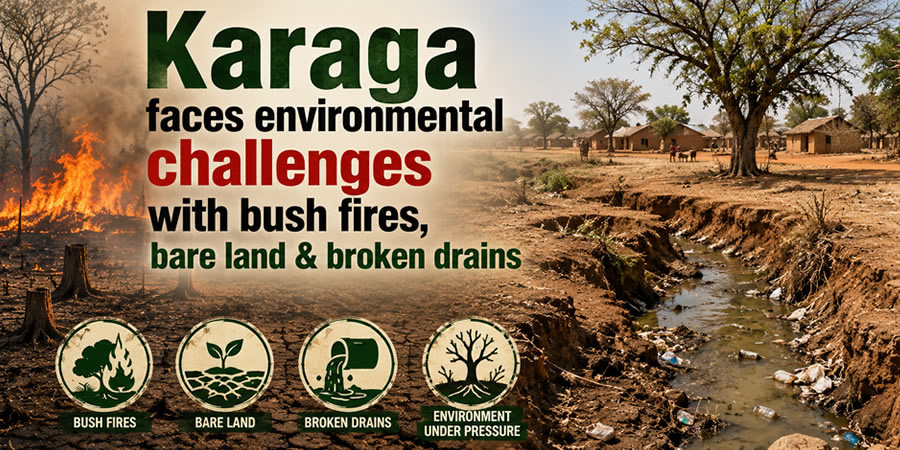
The Land: How Farming and Fire Are Changing Karaga's Ecology
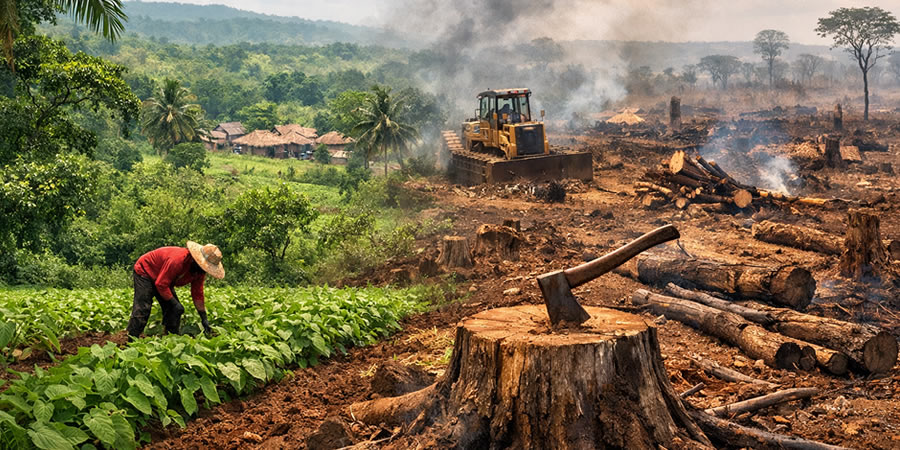
Karaga District falls within the savannah ecological zone, but the vegetation that once defined this landscape has been dramatically altered. The commonest farming practice in the Municipality involves ploughing and the use of the hoe method for clearing the land.
This practice not only leaves farmland bare and exposes it to erosion, but it is also rapidly depleting the vegetative cover and altering the entire ecology of the district. Over time, the natural vegetation has been reduced to grassland and scattered savannah, largely due to the adverse effect of bush fires that sweep through the area, particularly in the northern part of the Municipality where the damage is most conspicuous.
The cycle is vicious
Farmers clear land for planting, bush fires escape and burn out of control, the exposed soil washes away with the rains, and the land becomes less productive with each passing year. The result is a landscape that is slowly losing its ability to regenerate — and with it, the trees that provide food, medicine, shade, and shelter for both people and animals.
Energy: 95% of Households Burn Wood and Charcoal
The pressure on Karaga's tree cover does not come from farming alone. An overwhelming ninety-five percent of households in the district use wood and charcoal as their main source of energy for cooking and brewing.
Every meal prepared, every batch of shea butter boiled, every pot of local brew simmered — all of it draws from the district's diminishing tree population.
This heavy dependence on wood fuel contributes significantly to the depletion of tree species, particularly the shea tree and other valuable indigenous species that take decades to mature.
Recognizing the urgency of this crisis, several reforestation initiatives are currently taking place intensively in the district.
These include the President's Greening Ghana Project and the Ghana Environmental Management Programme (GEMP) , being implemented by the Forestry Commission, the Environmental Protection Agency (EPA), and the Ministry of Environment.
Other stories

Local Gov Ministry
Int of Local Gov Studies
Ministry of Information
Local Gov Service
Ghana MPs
Ghana Hospitals
NALAG
 facebook
 X
X
 Youtube
 instagram
 whatsapp
 +233 593 831 280
+233 20 230 9497
+233 593 831 280
+233 20 230 9497 0800 430 430
 GPS: GE-231-4383
 info@ghanadistricts.com
 Box GP1044, Accra, Ghana